Rockstar's Rob Nelson goes on the record: the Criminal Profile, suppressive fire and a romance you can skip
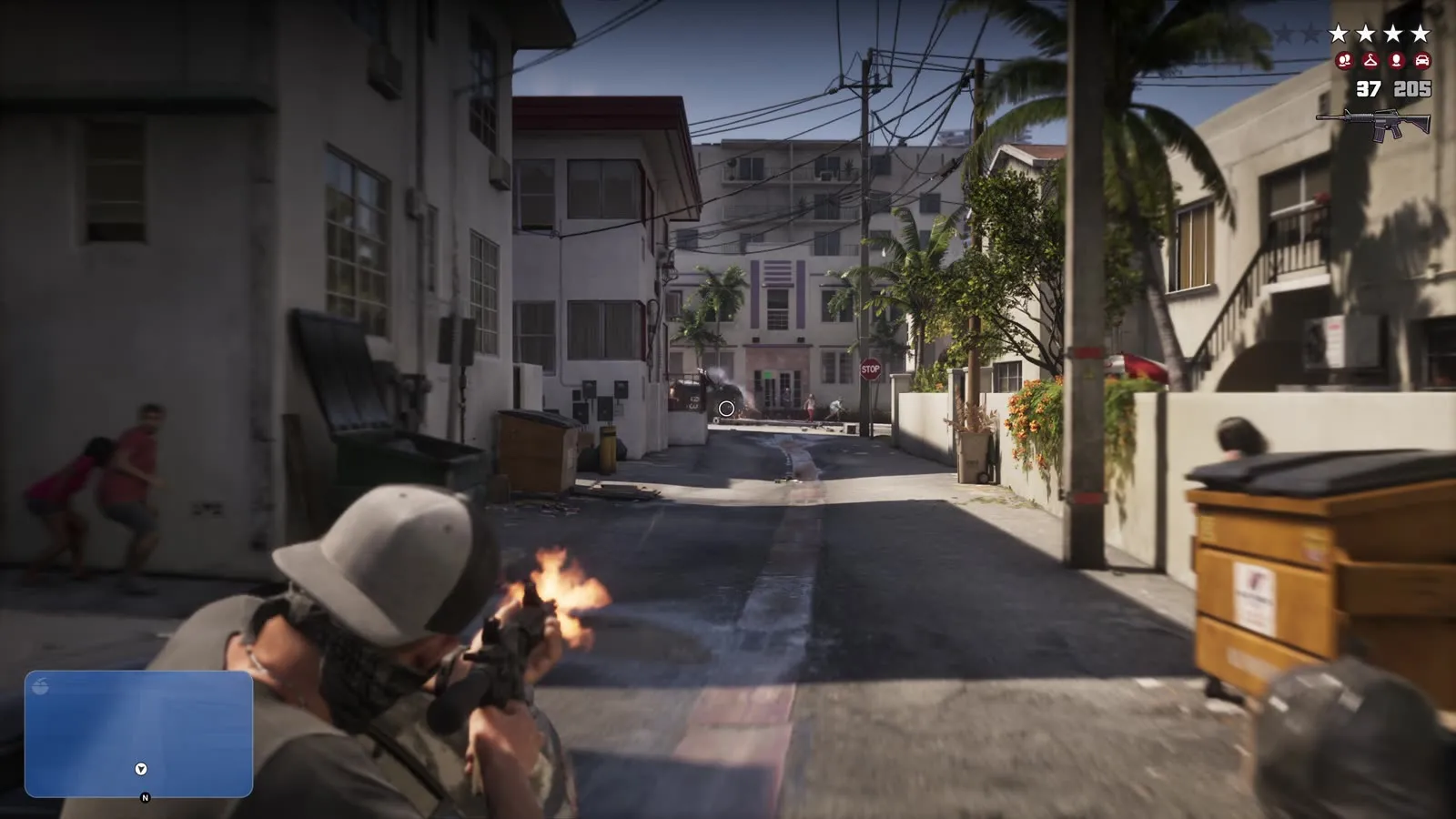
Rob Nelson, head of development and co-studio head at Rockstar North, took Famitsu through Grand Theft Auto VI system by system at the studio in Edinburgh, and the interview went live on 28 August. What matters is where it comes from. Almost every mechanic that poured out during Extended Look week reached us as a round-up of previews. Now there is a developer with a name and a job title behind them. The Criminal Profile is the first time the series tracks how you behave, and Nelson's version of it is narrower than the honour comparison everybody reaches for. It does not sort you into good and bad. It grades what kind of criminal you are, professional or violent and dangerous, and that reading decides how aggressively the people and the world around you respond. He explicitly rules out the Red Dead Redemption 2 mechanic everyone points at: no shop discounts pegged to a meter, because that reads as a videogame rule rather than as a place. He is equally clear that the system is not built to punish anyone for playing the villain. His own example: rob a jeweller, shoot somebody along the way, handle the rest cleanly and get out fast, and you still land nearer the professional end. The wanted meter was rebuilt around a rule Red Dead had and Grand Theft Auto never did. A crime no longer counts because the game saw it. Somebody has to witness it. Nelson says stars also climb slowly by design, so the rating never turns punitive, and cash in your pocket is genuinely at risk now, because Wasted or Busted takes all of it. That is what the in-game bank account is for. Suppressive fire is new to the series. Instead of putting rounds into a target you miss on purpose and shoot near it, to frighten or disorient and buy yourself time to leave. Nelson says the point is being able to escape without killing police or civilians, and that there are plenty of situations you can get through with nobody dead. In the chase he was showing, the patrol car flipped because Jason shot out its tyres, and every officer in it walked away. Long guns lost their invisibility, and that is probably the change that alters the feel of the street the most. A rifle does not live in a pocket any more. You manage it from a locker at any Ammu-Nation, or out of your own vehicle. Slung over a shoulder, almost nobody minds. In your hands it clears the pavement and gets you stopped by police. Nelson's reasoning is that a world built with this much detail cannot also let you walk around holding a carbine while nobody looks up, the way GTA 5 did. The relationship is a system you are allowed to decline. Whether Jason and Lucia move through the story as a couple or as accomplices is the player's call, and a bond left uncultivated simply loses what closeness unlocks, holding hands and kissing among it. Neglect is not a verdict, the connection can be rebuilt, and the menus carry a status for it, sitting next to the bank balance. A few smaller things now pinned down. Character switching is gated by the story rather than free: the housing project mission was locked to Jason on purpose, because the situation calls for his military training. Car theft is tiered, from a slim jim on older vehicles to a key cloner you only get later, with alarms and trackers on anything expensive and an alarm that goes off if you break the window. Hideouts move with the chapters and sit closer to Red Dead's camp than to a GTA safehouse. Food carries buffs on top of the stamina, cardio and fitness stats you raise in a gym, and Nelson describes the set-by-set minigame as honestly demanding. A prototype where groceries restocked the fridge was cut for being too fiddly. And asked whether 19 November holds, he answered, laughing, that the game will release properly. Four database entries moved on the back of this. Criminal Profile and the Jason and Lucia relationship go from trailer-spotted to confirmed, because the developer has now described both in his own words. Map size keeps its rumour status but gains a name: the twice GTA 5 and three times Red Dead 2 figures trace to Nelson, relayed by the creator TGG, and not to anything Rockstar published. Frame rate stays a rumour with better evidence under it, because Famitsu never asked, and the 30 fps everyone quotes rests on a separate creator session plus Digital Foundry's own read of Rockstar's 4K file: native 1440p lifted by a spatial upscale, a stable 30 with the odd single frame dropped, and the conclusion that a 60 fps mode on console is very unlikely for CPU reasons. A measurement and a relayed quote are not an announcement, and our entry says so.
Sources (7)
- www.famitsu.com · 2026-08-28
“きちんと発売されます(笑)”
- kotaku.com · 2026-08-28
- www.gamesradar.com · 2026-08-28
- insider-gaming.com · 2026-08-27
- www.videogameschronicle.com · 2026-08-28
- www.videogameschronicle.com · 2026-08-28
- www.purexbox.com · 2026-08-28